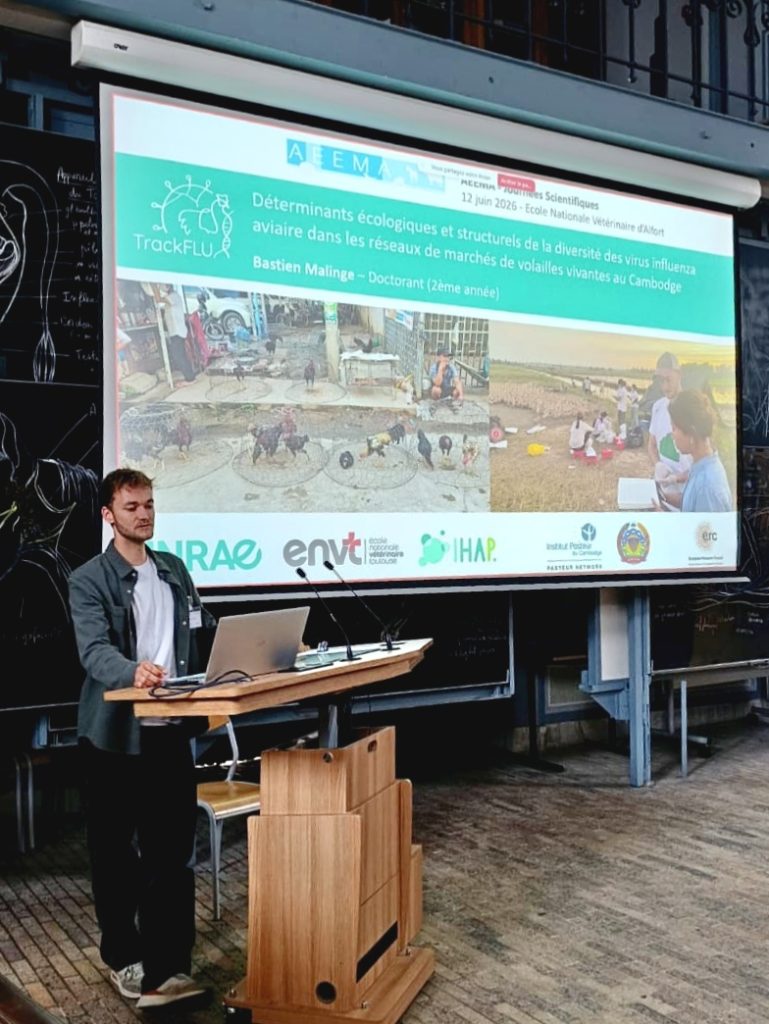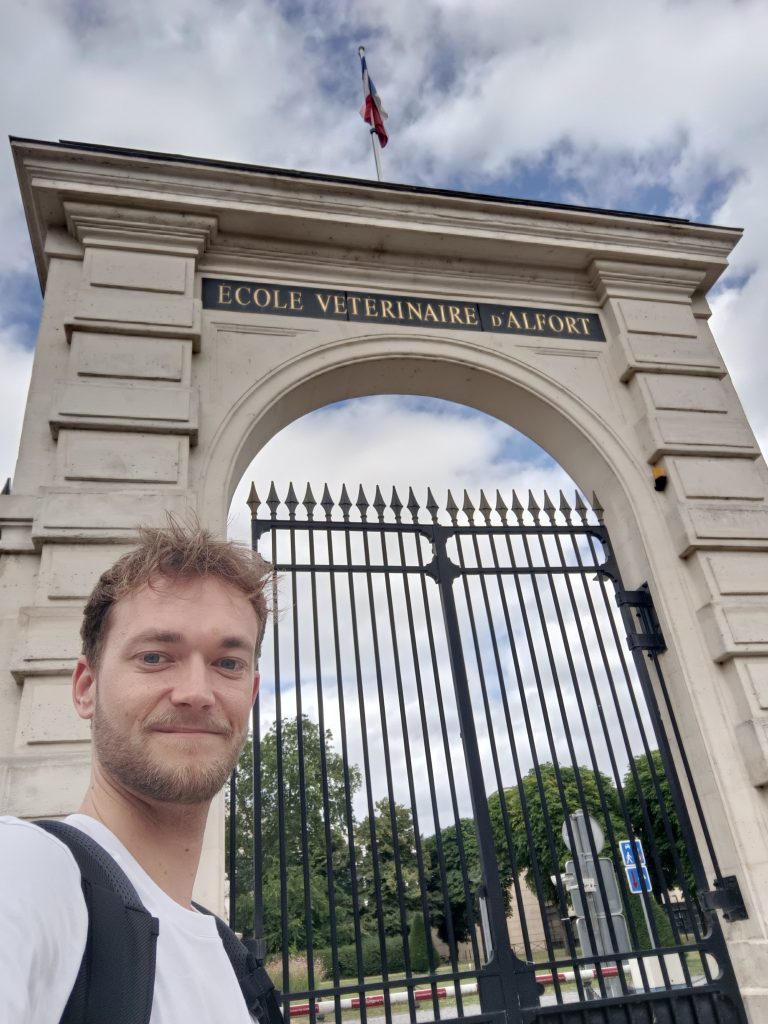
Earlier this month, Bastien Malinge attended the 2026 annual meeting of the Association for the Study of Animal Disease Epidemiology (AEEMA), held at the National Veterinary School of Alfort (EnvA), Paris. This French veterinary epidemiology conference aims to gather all actors participating in animal health and epidemiology, from field veterinarians acting at the local level, to national reference labs, public researchers, and pharmaceutical companies. After a first day dedicated to vaccination in animals (development, goals, strategies, logistic and social challenges), the second day was open for presentations about animal epidemiology. This was the opportunity for Bastien to share the first results of his PhD project, based on the cross-sectional study conducted in Cambodia in 2025.
Titled “Ecological and structural determinants of avian influenza virus diversity in Cambodian live bird market networks”, this presentation was the opportunity for Bastien to share the method and first results of his study. First, Cambodian poultry premises were characterized and classified into a typology thanks to a multifactorial and clustering analysis. To identify the premises types at risk for avian influenza virus (AIV) diversity, various prevalence (co-circulation of multiple subtypes, detection of co-infected birds) were compared among all the types with generalized linear models (GLMs). Then, in order to identify the specific practices at risk for co-circulation and co-infection in LBMs, an Additive Bayesian Network (ABN) analysis was used. This technique allows for direct and indirect association between the outcome variable (such as co-circulation) and the explanatory variables extracted from the questionnaires. These analyses provide key insights into the drivers of AIV diversity in Cambodian poultry market networks and will form the basis for the phylodynamic analyses and transmission models that are planned later this year.
Beyond this first exiting presentation experience for Bastien, AEEMA 2026 provided a valuable opportunity to engage with epidemiologists, veterinarians, and animal health professionals from across France. The analyses are still being finalized, and we look forward to sharing the full results soon. Hopefully, you will be able to learn more about these findings by the end of the year—stay tuned!